
Lost and Found at Durell Vineyard
The story of one of California’s once-beloved and now nearly forgotten Syrah selection
-Written by Aaron Romano, Wine Spectator (November 10, 2026)
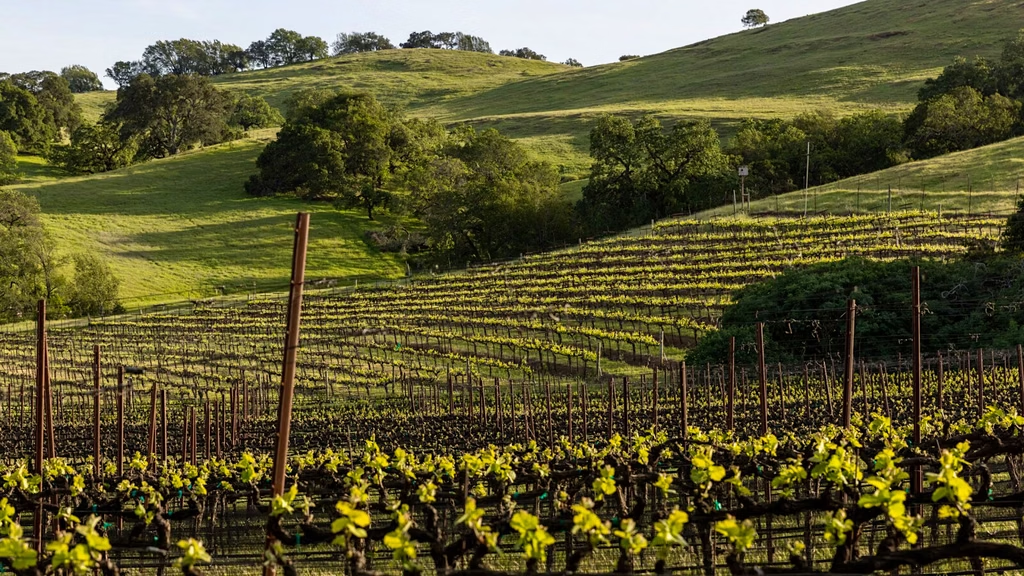
Durell Vineyard is one of Sonoma County’s most prominent vineyards and the origin of one of California’s influential Syrah selections. (Adam Decker)
I’m sitting at an oval dining table in the Durell Vineyard ranch house, just outside the town of Sonoma. Chris Towt, co-owner of Dunstan, and his wife and partner, Ellie Phipps Price, who co-owns the vineyard with her former husband, flank me. At the other end of the table are Steve Hill, Durell’s original vineyard manager, and his son, Ned, who used to work the vineyard and now runs his own vineyard management company.
“Forgive me, my numbers might be approximate rather than exact,” prefaces Steve, 79, as he begins his narrative. “In approximately 1975, Ed Durell bought this property, which is shaped like the letter T, with approximately 300 acres north-south and 100 acres east-west.”
Ed Durell, a San Francisco food broker, bought a then-large cattle farm as a quiet weekend getaway for his family. He was also a father figure to Hill.
“One day, he called me and said, ‘Come see my new property.’ And so I did. And I told him, ‘This looks like an awfully big place. How big is it?’ He said, ‘I’m not really sure; we need to get on a motorcycle and go riding and see!’”
After the tour, Durell asked Hill to work for him on the ranch. “Well, I did, and I haven’t left,” says Hill.
Today, Durell is one of Sonoma County’s most prominent vineyards. Located where the Sonoma Valley, Carneros and Sonoma Coast AVAs overlap, it now spans more than 750 acres, with about 160 acres under vine. In the 1980s and ’90s, Hill planted Syrah using budwood from Foundation Plant Services at the University of California, Davis. The material was later known as the “Durell clone,” after cuttings spread across California. Most of those plantings have since been replaced, though, and the once-popular Syrah selection now risks vanishing. But a hillside just north of the ranch house still holds 1.72 acres of living history. The people around this table are among the few dedicated to keeping the story alive.
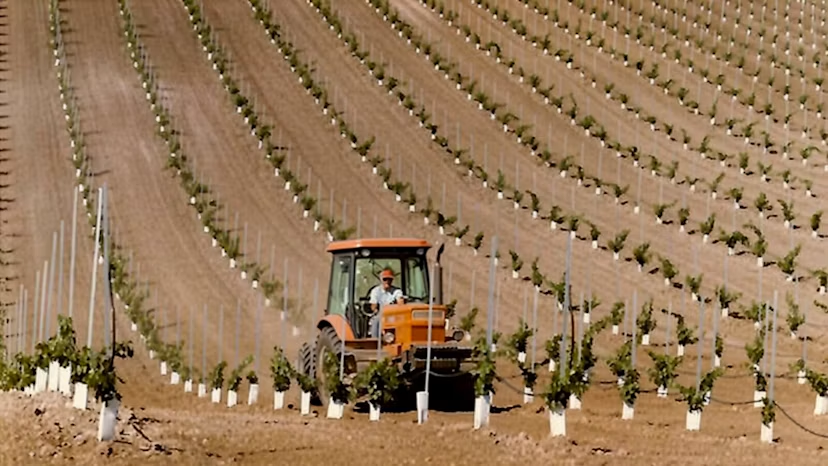
Steve Hill planted the majority of Durell Vineyard throughout the 1980s. (Dunstan)
Starting From Scratch
“I knew absolutely nothing when I started,” chuckles Hill. He recalls Durell saying, “What’s there to know? There’s nothing here!”
Hill remembers that the only nearby vineyard was Sonoma-Cutrer’s Les Pierres, just down the road. With help from neighbors and viticulture courses, Hill began planting in 1979, starting with about 40 acres of Chardonnay.
What Hill knows now, but didn’t then, is that there is dramatic soil variation across the estate, from sandy silt to stony ancient riverbeds to rocky, volcanic soils. Hill’s instinct then was not to plant just one thing. It started when John Sheela, then-owner of Kenwood Winery, asked Hill to plant Syrah. New to grapegrowing, Hill had never heard of the grape. Nevertheless, he searched for sources, though they were scarce at the time. According to the California Department of Food and Agriculture Grape Acreage Report, Sonoma County had only 8 acres of Syrah in the mid-1980s, with about 100 acres statewide.
Hill found a Mendocino County vineyard willing to sell budwood, but the grower warned him, “You’re not going to like it. It’s not very healthy.” So he kept looking and eventually found nursery stock at U.C., Davis, Foundation Plant Services.
Short-Lived Star
Hill planted about 5 acres of Syrah in 1981. Kenwood used it for one vintage before Hill found other interested buyers, including Jed Steele, then-winemaker at Kendall-Jackson, and Steve Edmunds of Edmunds St. John. Both would later bottle wine with Durell Vineyard on the label. In fact, the Kendall-Jackson Syrah Sonoma Valley Durell Vineyard 1986 appeared at No. 23 on Wine Spectator’s inaugural Top 100 list in 1988.
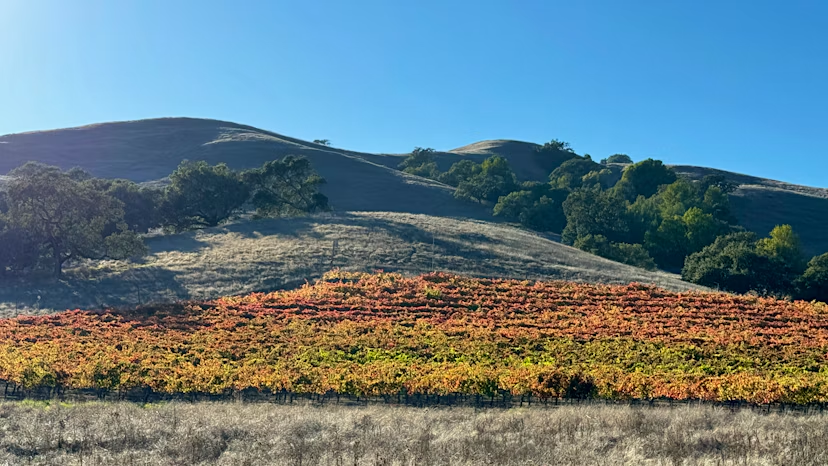
One small block of Syrah planted with the Durell clone remains at Durell Vineyard. (Dunstan)
With Durell Syrah in the spotlight as one of the few proven sources of Syrah in the area, other vintners began asking for cuttings to use in their own vineyards. Hill happily sold them, popularizing what became known as the “Durell clone,” one of California’s first influential Syrah selections to spread across the state.
Technically not a true clone, the Durell clone was simply the name vintners associated with the budwood. U.C., Davis, Foundation Plant Services registered it as Syrah FPS 08 (Durell clone) before tracing it to Shiraz FPS 01, which the university had planted in 1973. Those vines likely arrived from Victoria, Australia.
Sadly, its fame was short-lived. Durell sold 70 vineyard acres to Kendall-Jackson in 1993, with the original Syrah block part of the deal. Shortly thereafter, perhaps because of the Durell clone’s susceptibility to viruses, the introduction of certified French Syrah clones and the rise of the Estrella clone (now the most widely planted Syrah throughout the state), Durell’s popularity began to wane.
In 1996, Phipps Price and her former husband, Bill Price, bought Durell (they remain co-owners today). Rob Harris took over vineyard operations from Hill in 2011, and the following year, after harvest, another Syrah block was ripped out.
Chardonnay and Pinot Noir came to define Durell, helping it become one of Sonoma’s most coveted sites as wineries including Kistler, Patz & Hall and Gary Farrell purchased fruit for their vineyard-designated bottlings.
Through all that, one small Syrah parcel at Durell, planted in 1991, survived.
Dunstan Checks In
Back at the table, a snoring dog has taken up residence at my feet. (Another barks off in the distance.) Relics of the Durell Syrah—a Kendall-Jackson bottling from 1987 and several Edmunds St. John bottlings from the early 1990s—sit in the center. The conversation transitions to Dunstan’s Syrah.
Towt, unaware of the Durell clone’s history before making Syrah from the property, says it led him down a path that ended with the five of us sitting here today. “Syrah is a unique thing here at the property,” says Towt. “And we want to promote it.”
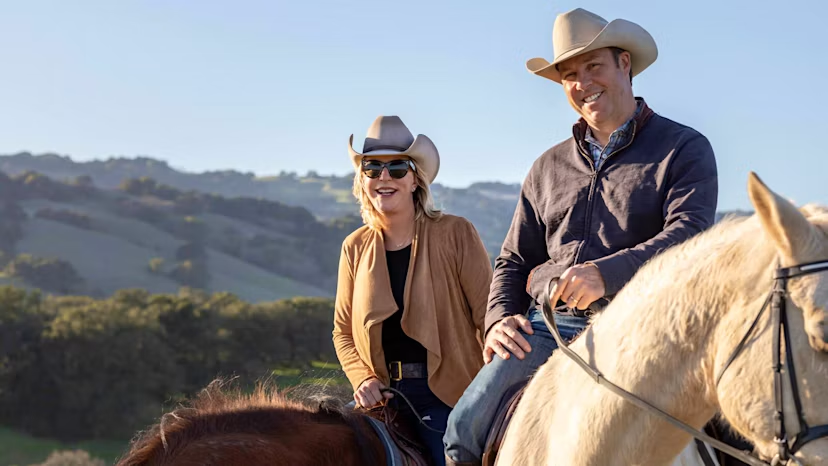
Chris Towt and Ellie Phipps Price of Dunstan. (Kimerlee Curyl)
Towt and Phipps Price launched Dunstan in 2008, planning only Pinot Noir and Chardonnay. But an opportunity for Syrah soon tempted them. “We found out it can be a slippery slope,” says Towt. “You get offered something, and you say, ‘Sure, why not?’”
In 2012, a buyer backed out of a Durell Syrah contract, and Harris offered Towt the grapes. On the encouragement of then-winemaker Kenneth Juhasz, Dunstan made its first Syrah. However, a barrel sample of the resulting wine was raw and tannic, and it disappointed Towt and Phipps Price.
Towt suggested Juhasz sell it as bulk, and he agreed. Then, three years later, Juhasz approached Towt and Phipps Price with a wine but wouldn’t tell them what it was. “We were like, this is delicious, what is this?” recalls Towt.
“This is that Syrah you told me to get rid of,” Juhasz replied. He’d kept it in barrel all along, resulting in what Towt describes as an over-the-top, concentrated wine. But Towt and Phipps Price thought, “what the heck,” and bottled it anyway.
But that Syrah block was the same one removed after 2012. So Dunstan’s focus remained on Pinot Noir and Chardonnay until 2021, when a similar situation arose. The remaining Syrah block at Durell, planted in 1991 and under contract with Ram’s Gate, became available. This time, Juhasz made a Syrah with intention (and a more traditional 18-month élevage).
The latest vintage, Dunstan Syrah Sonoma Valley Durell Vineyard 2023, balances elegance and muscle, with floral and spice details amid structured tannins and freshly cracked pepper notes. Edmunds had used that 1991 block for his wines, dubbing it “Raccoon Hill” because the critters ate half the crop before he could pick. Today, Towt laments that turkeys are the new culprit.
We visit the vines, now 35 years old and riddled with grapevine corky bark disease, a graft-transmitted affliction that thickens the bark at the base, giving it a corklike appearance, and restricts the vines’ ability to transport nutrients, delaying shoot growth in spring and slowing fruit maturity while reducing yields. The leaves look like mid-October foliage rather than mid-September, another symptom of corky bark. But it’s a stroll down memory lane for Hill, who hasn’t spent much time walking the rows at Durell since retiring.
Eventually, these weathered vines will succumb to age and disease. Unfortunately, without clean genetic material, the Durell clone may become a clone of legend. For now, a few documented plantings exist in California; Melville in Santa Barbara County has a small block devoted to the clone, and Unti has a few acres planted in Dry Creek Valley. Hill also took cuttings to plant at his nearby Parmelee-Hill vineyard.
Nonetheless, Towt is determined to carry one of California viticulture’s foundational stories through Dunstan’s Syrah production. He likens Durell Syrah to his and Phipps Price’s work at their Montgomery Creek Ranch, a wild horse sanctuary they founded in 2012 that is home to more than 200 wild horses. “We like saving things, and this Syrah is not going to go away.”
Syrah Availability
As of Fall 2026 we currently have the newly released 2023 vintage of Dunstan Durell Vineyard Syrah available along with limited quantity of the 2022 vintage, which was rated 94 Points from Wine Enthusiast Magazine and was elevated to a Cellar Selection by reviewer Tom Capo.
Click to Shop Syrah